Table of Contents
- Most Elegant & Premium European Linen Fabrics: Types, Production Process, Properties, Uses, and Where to Buy?
- What is Linen Fabric?
- Discover Most Premium European Linen Fabrics
- Most unique Fabric Striped Linen Fabrics
Most Elegant & Premium European Linen Fabrics: Types, Production Process, Properties, Uses, and Where to Buy?
What is Linen Fabric?
Linen Fabrics consists of flax plant fibers which create a fabric that possesses both high strength and absorbent properties together with its ability to control body temperature. The material has a technical classification as a bast fiber because it derives from the plant’s stem inner bark which serves as a backbone for the plant’s vertical growth. The durability and crispness of linen fabric arise from its biological function which explains its endurance against damage compared to cotton’s soft “seed” fibers.
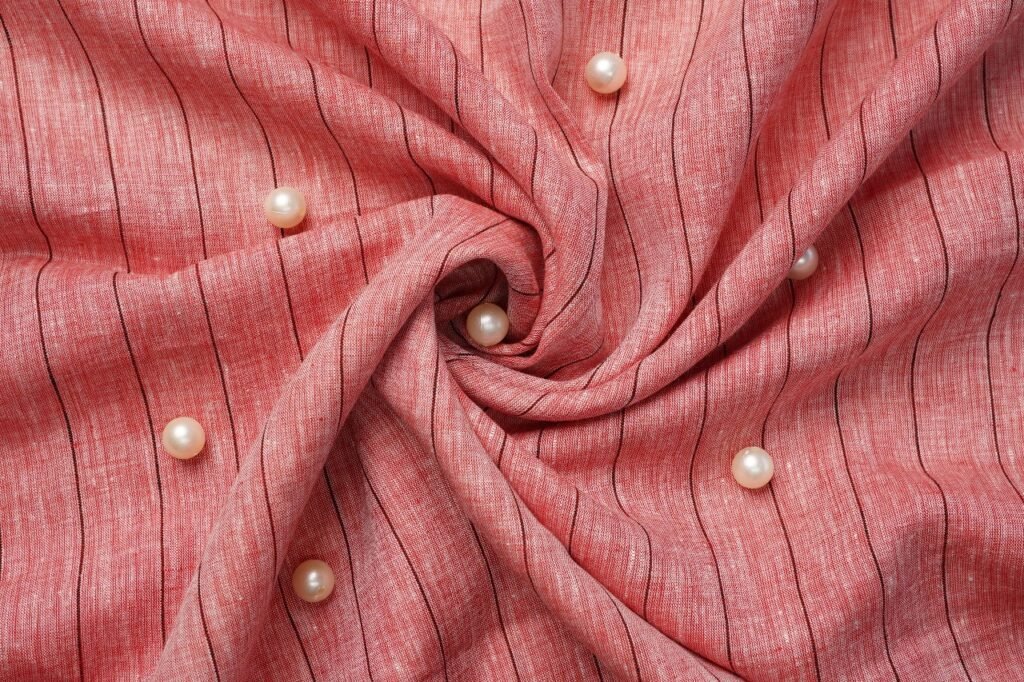
Science Behind Linen Fabrics Behavior
While many fabrics claim to be “breathable,” linen’s performance is rooted in its unique molecular and physical structure.
The “Coolness” Factor: Linen fibers are hollow, which allows for extreme air permeability. However, the true cooling power comes from its thermal conductivity. Linen has the highest heat conductivity of all natural fibers (surpassed only by silk). This means it physically transfers heat away from your skin much faster than cotton or wool, creating a genuine cooling sensation known as a “cold hand.”
Absorbency: Linen is highly hygroscopic. It can hold up to 20% of its weight in water without feeling damp to the touch. In humid climates, this is crucial—the fabric wicks sweat aggressively and dries rapidly, preventing the bacterial growth that causes odors in other fabrics.
The Art of Woven Luxury at Symphony Fabric
At Symphony Fabric, our dedication to the loom transforms the finest natural fibers—from crisp European Linen to soft Cotton Linen and sustainable Organic Linen Fabrics—into textiles of depth and character. We employ time-honored weaving techniques to ensure every yard reflects our standard of perfection.
Explore Our Collection Of Organic Cotton Linen Fabrics GOTS Certified.
| Feature | Organic Cotton & Linen Fabrics | Synthetics |
|---|---|---|
| Breathability | Excellent. Hollow fibers allow maximum airflow, keeping you cool naturally. | Poor. Traps heat and moisture against the skin like plastic. |
| Moisture Wicking | Superior. Absorbs moisture instantly and dries quickly. | Low. Repels water, trapping sweat and causing odor build-up. |
| Skin Sensitivity | Hypoallergenic. Gentle, anti-static, and safe for sensitive skin. | Irritating. Prone to static cling and can cause skin irritation. |
| Aging Process | Gets Better. Softens and becomes more luxurious with every wash. | Degrades. Often pills, loses shape, and looks worn out over time. |
| Odor Resistance | Natural. Antibacterial properties keep fabric smelling fresh. | None. Retains body odors even after washing. |
| Sustainability | Biodegradable. Renewable resources that return to the earth. | Polluting. Petroleum-based; sheds microplastics and non-biodegradable. |
Why the World Chooses Symphony Fabric
We are the pioneers of sustainable fabric manufacturing worldwide and the undoubted Corduroy Specialists of the global textile industry.
With a massive production capacity of 7 to 8 Lakh meters per month, we are the manufacturing partner of choice for the biggest fashion brands across the USA, UK, and Europe. These industry giants trust Symphony Fabric not just for our scale, but because we provide the world’s best GOTS-certified, sustainable, and organic fabrics that define the future of luxury and responsibility.
What are the different types of linen fabrics?
Linen isn’t a “one size fits all” category. Depending on the weave and treatment, it serves different purposes:
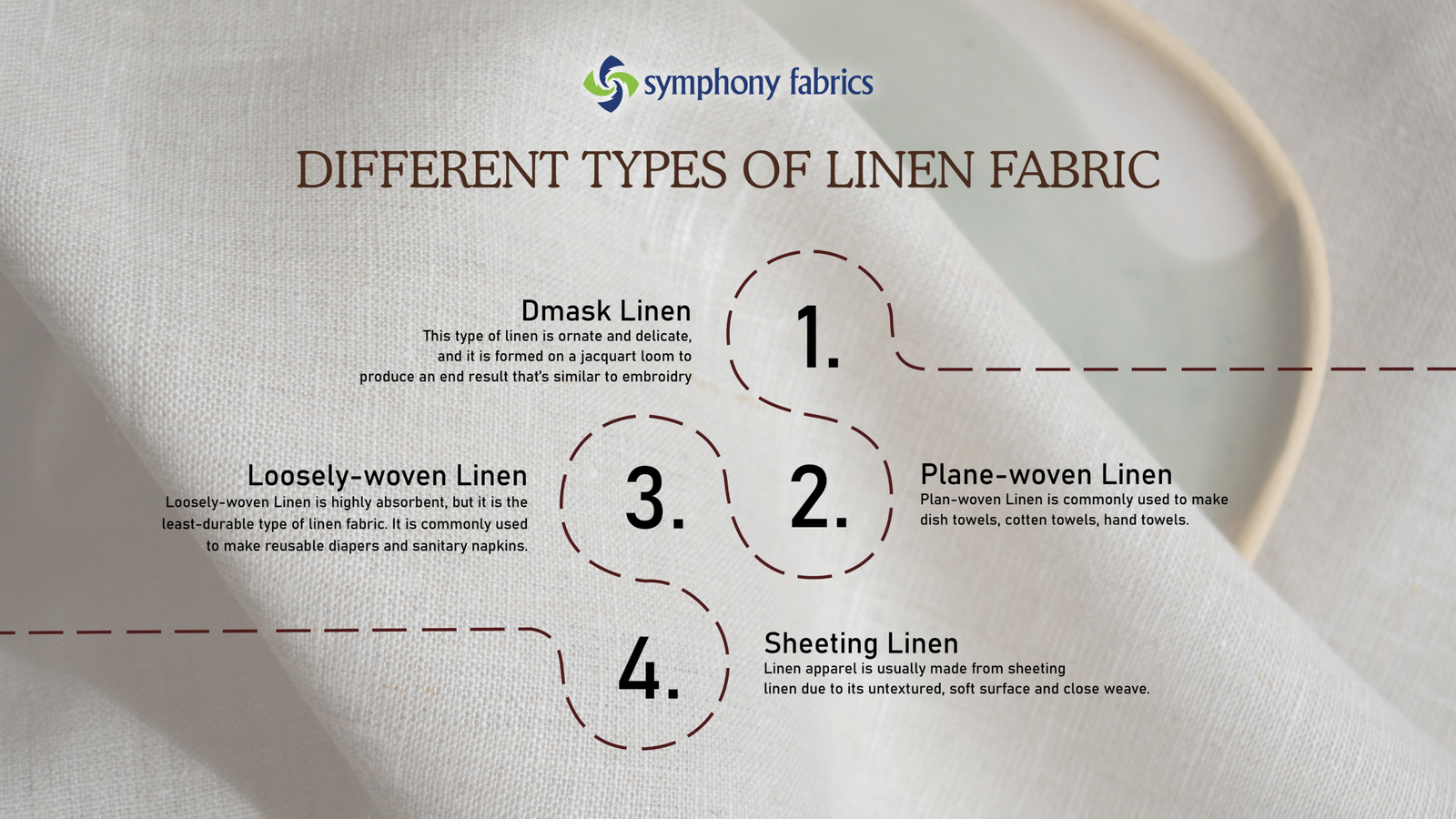
Damask Linen: This Type of linen is ornate delicate and it is formed on a jacquart loom to produce an end result that’s similar to embroidry.
Plain-Woven Linen: Plain Woven Linen Fabrics is commonly used to make dish towels, Cotton towels, Hand towels.
Loosely Woven Linen: Lossely – Woven Linen Fabrics is highly absorbent. It is commonly used to make resuable diapers and sanitary napkins.
Sheeting Linen: Linen Fabric apparel is usually made from sheeting linen due to its untextured, soft surface & close weave.
FAQ
What are the benefits of using linen bedding?
Temperature Regulation: Because linen fibers are hollow, they act as a natural insulator in winter and a cooling vent in summer.
Hypoallergenic: It is naturally antibacterial and lint-free, making it the safest choice for sensitive skin or allergies.
Longevity: linen becomes softer and more lustrous with every wash. It can literally last for decades.
Massage Effect: The microscopic breaks in the fiber provide a subtle stimulatory effect on the skin, promoting blood flow while you sleep.
What makes Symphony Fabrics the best in the world?
Symphony Fabrics provides the best textiles available today. We focus on authentic European Linen Fabric and have relationships with the best flax growing regions. Our Yarn Dyed Linen has outstanding color and depth, as well as our Striped Linen and GOTS Certified Organic Linen for those seeking sustainable luxury. Because of our commitment to high-quality products, there is no better choice than Symphony Fabrics for both Designers and Serious Customers.
What kind of fabric is linen exactly?
The Flax plant generates a type of fabric which is referred to as “Linen”; this fiber is a natural fiber that has been produced from the plant’s stem and has outstanding tensile strength and it has a radical texture (“Slubby”). Symphony Fabrics makes sure that each foot of cloth maintains an organic origin, yet still meets very high standards of durability.
Can I order linen fabric samples from Symphony Fabrics?
Absolutely. We believe you should experience the “cold hand” and superior weight of our premium textiles firsthand. You can order swatches directly from Email or you can contact us.
Where can I buy high-quality linen fabric by the yard?
You are already in the right place. Symphony Fabrics provides a seamless experience where you can purchase our world-class European and Organic linens by the yard, delivered with the care and prestige your work deserves.