
Table of Contents
- What is hemp Fabric? Properties & How it's Made & Where it Manufacture
- How is Hemp Fabric made ?
-
Woven Hemp Fabric — Key Properties & Performance
-
-
-
- Environmental impact
- Fiber origin
- Strength & durability
- Abrasion resistance
- Fabric weight (GSM)
- Thickness & hand feel
- Stretch & recovery
- Dimensional stability
- Shrinkage
- Surface texture
- Breathability
- Moisture management
- Thermal performance
- Dye performance
- Odor & microbial resistance
- Skin comfort
- Wrinkling behavior
- UV protection
- Drape
-
-
- Add Your Heading Text Here
-
What is hemp Fabric? Properties & How it's Made & Where it Manufacture
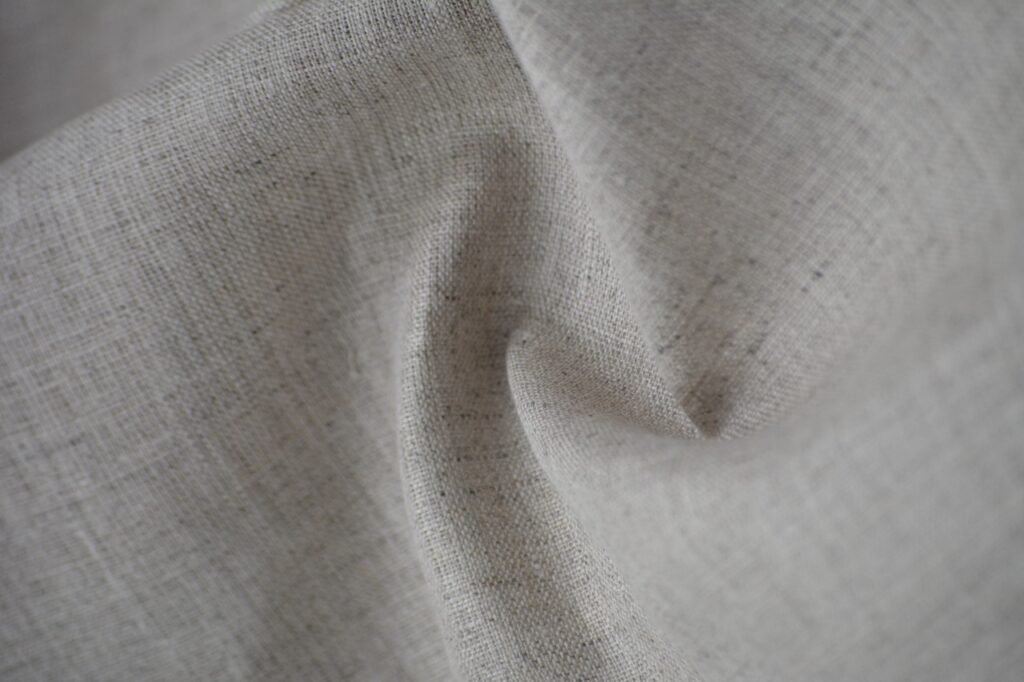
Hemp garment fabric is a 100% natural textile made from the strong fibers of the Cannabis sativa plant. For thousands of years, hemp has been used to make clothing, ropes, sails, and other everyday essentials. Today, it is one of the most in-demand sustainable fabrics in the global apparel and home textile market.
Symphony Fabrics is an export-focused hemp fabric manufacturer offering high-quality hemp-cotton, hemp-apparel-fabrics, and hemp organic-cotton fabrics for international brands.
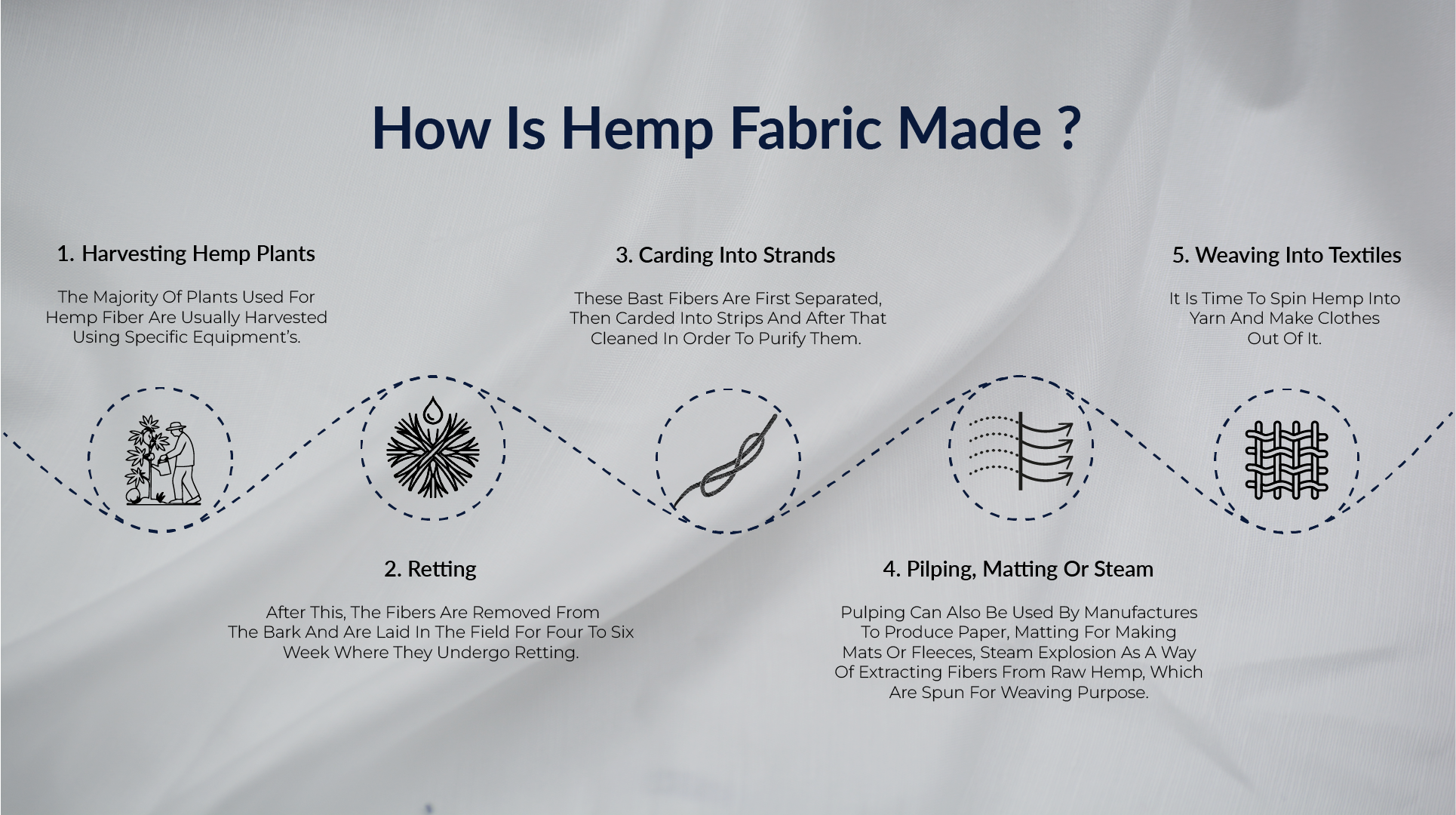
How is Hemp Fabric made ?
Woven Hemp Fabric — Key Properties & Performance
Environmental impact
A renewable, biodegradable fiber with a low environmental footprint. Hemp requires significantly less water and fewer agrochemicals compared to conventional cotton.
Fiber origin
A natural bast fiber extracted from the stem of Cannabis sativa. feautring long staple lengths and a high cellulose content, contributing to its durability and strength.
Strength & durability
These fibers are exceptionally strong—approximately 1.5 to 3 times stronger than cotton. In woven form, hemp canvas (around 12 oz) can reach grab strengths of ~1100 N, compared to ~750 N for cotton duck of similar weight.
Abrasion resistance
Performs very well under repeated wear and friction, offering better resistance to surface damage than many comparable cotton fabrics.
Fabric weight (GSM)
Commonly used for apparel and heavy shirting in the range of approximately 130–260 GSM, consistent with qualities and sourced from regions such as Amsterdam, Argentina, Auroville, and Bali.
Thickness & hand feel
Medium-bodied in pure hemp.at primary level it can feel crisp or lightly structured initially, softening progressively with wear and laundering.
Stretch & recovery
Low stretch with minimality . Maintains shape effectively, especially in plain and twill weaves.
Dimensional stability
Exhibits good stability with limited bagging or growth under normal garment stress.
Shrinkage
Low to moderate shrinkage on the first wash when untreated in comparisons to cotton. Typically controlled through pre-washing or pre-shrinking processes.
Surface texture
Naturally linen-like and slightly coarse in its raw state, becoming noticeably softer with repeated washing and use.
Breathability
It is Highly breathable due to it’s hemp’s porous fiber structure and cellulosic nature, making it comfortable across seasons.
Moisture management
High moisture regain with excellent wicking properties. This Effectively draws sweat away from the skin and dries faster than many cotton fabrics.
Thermal performance
With Low inherent heat retention but excellent temperature regulation which makes it cool to wear in warm conditions and insulating when layered.
Dye performance
Accepts dyes well, particularly reactive and low-impact dyes, when properly pretreated.
Odor & microbial resistance
Naturally antimicrobial and resistant to mold, mildew, and rot. Helps reduce odor buildup caused by perspiration.
Skin comfort
Generally hypoallergenic and suitable for sensitive skin, with no common synthetic irritants.
Wrinkling behavior
Similar to linen, hemp tends to crease easily. Pure hemp wovens have a moderate to high wrinkle propensity.
UV protection
It offers naturally strong UV resistance, often outperforming polyester and many cotton fabrics in sun protection.
Drape
Medium drape with a structured fall. Softer movement is achieved in lighter GSM fabrics or when blended with fibers such as cotton or lyocell.